
A History of Doors in Sri Lankan Architecture: Book Spotlight
Doors are everywhere, yet we rarely stop to consider their significance. We travel through them every day, and yet little do we know of their histories.
Dr. Nishan Rasanga Wijetunge’s new Open Access Book, “Ge Dora―Timeless Thresholds: Glimpses of Sri Lanka’s Domestic Doors Through History”, guides us through the doors of his childhood in Sri Lanka, shedding light on their cultural, colonial, and symbolic dimensions of Sri Lankan architecture.
Through the doors of memory
The private interior of the home is one of the first spaces where we form our ideas of the world, so it’s fitting that Wijetunge begins his exploration of the significance of doors by taking us through the memories of his childhood in Sri Lanka.
Wijetunge tells us that he was enchanted by doors as a child. His mid-19th century ancestral home was full of doors brimming with allure and mystery, he reflects. It’s this past that returns to him strongly during his architectural studies, staying with him throughout his PhD fieldwork days and going on to shape his future research interests.
In “Ge Dora―Timeless Thresholds”, he settles on the study of Sri Lankan architecture and what it can tell us about history and culture.
A brief history of Sri Lankan architecture
Sri Lankan architecture is unique in the way it is caught between tradition and other cultural influences. Traditionally, Sri Lanka’s architectural heritage had been one of forms that were, observes Wijetunge, ‘a serene tribute to simplicity and harmony with nature.’
However, colonial influence over time – from smaller invasions and migrations from Southern India to the mass colonisation undertaken by the British Empire in the late 18th century – has resulted in hybrid creations where tradition and foreign elements intersect. As a result, Sri Lankan architectural sites have become cultural melting pots, folding together private and political spheres.
While arguably leading to beautiful and interesting hybrid building designs, these architectural influences from Beritan, Holland, and Portugal detracted from Sri Lanka’s growing desire to reclaim its own architectural heritage.
Political independence and an evolving architectural landscape
Sri Lanka gained political independence from the British Commonwealth in 1948, eventually becoming a republic in 1972. In the wake of independence, the country was searching for a new identity. And so were its architects.
In the 1950s, Minette De Silva, the first Sri Lankan woman to train as an architect, pioneered the concept of a ‘Modern Regional Architecture for the Tropics’. Her unique approach to Sri Lankan architecture merged modernist principles with local materials and a deep sensitivity to regional characteristics. Her work informed the Tropical Modernism movement, a style that adapted European modernist design principles to humid, regional climates.
Later movements in the 1960s, such as the ‘American-style’, rebelled against the colonial architectural legacies favoured by the elite, seeing America, somewhat ironically, as a symbol of anticolonialism.
From the 1980s onwards, eclectic styles and architectural experimentation became increasingly popular. State-sponsored mass modernisation programs, such as Gam Udawa (Village Reawakening), brought together vernacular inspirations and modern approaches to address the nation’s socio-economic aspirations and foster its flourishing identify during the era of globalisation.
Sri Lanka’s domestic doors
Each door to be found in Sri Lanka, says Wijetunge, is a ‘silent sentinel’ to this rich architectural legacy and its accompanying story.
Over the past two decades, Wijetunge has traveled across the towns and villages of Sri Lanka, taking photographs of sixty six doors that represent three pivotal centuries – the 18th, 19th, and 20th centuries – that formulate the narrative of the island.
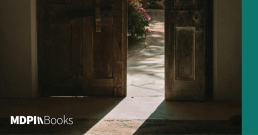
But why doors? Doors, he says, bear witness to time while embracing the transformations that belong to certain historical periods. They are not just entryways into the domestic; they are portals leading back into the past, revealing the political, economic, and socio-cultural dynamics that constructed their existence.
With the book, Wijetungue wanted to address the lack of serious studies on the significance of doors. He chooses this element of the domestic for its unique position in the configuration of the house; doors are thresholds, not just physically but symbolically.
To explore the rich history of domestic doors in Sri Lankan architecture, download and read the Open Access Book for free.